
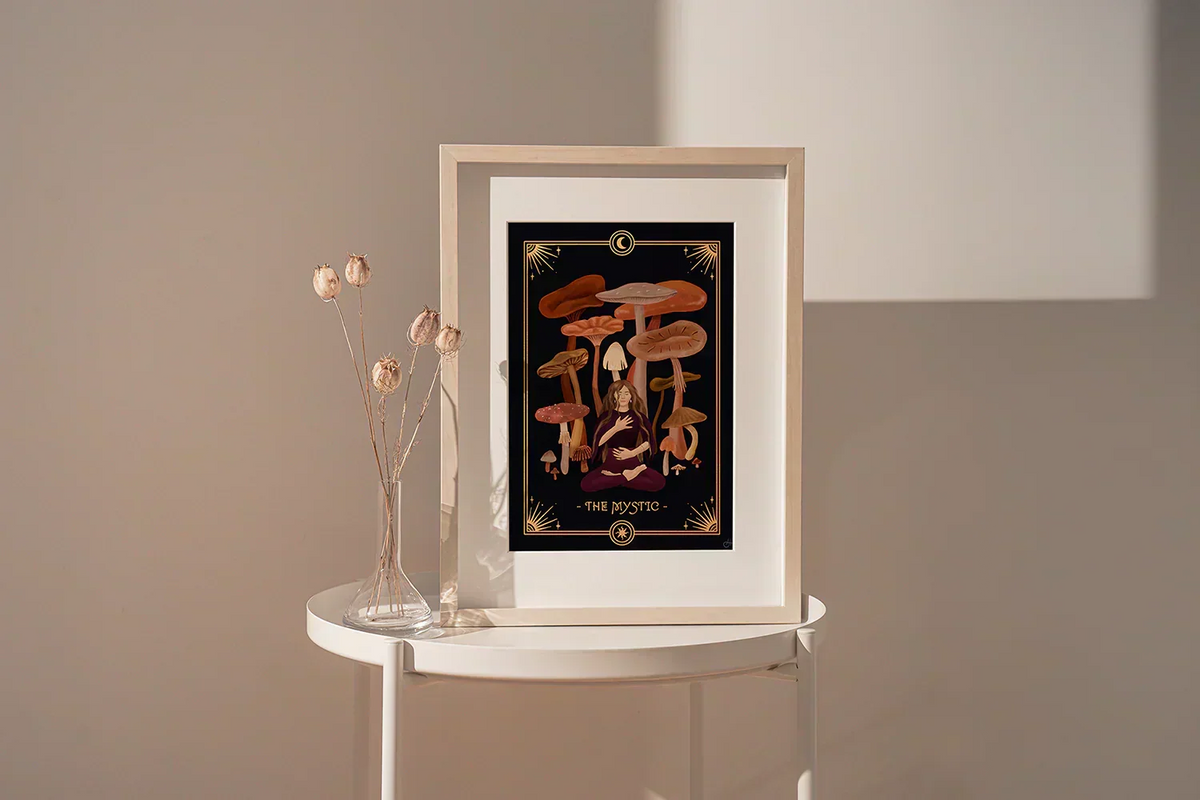
Every culture has had its seers and shamans – their energy lives on in the Mystic. She is the archetype of inner knowing, the one who senses what cannot be seen and knows truths that can’t always be proven. Her presence feels serene, grounded, and simply... zen.
If you think that this sounds a lot like the Priestess, you're right – the only difference is that the Priestess channels her connection to the divine outward in service to others. You could say that every Priestess has the Mystic archetype in her, but not every Mystic becomes a Priestess.
The Mystic archetype reminds us that we need to slow down and look inward, which is very much needed in a world that seems to get faster every day. With her gentle, quiet presence, she remembers the power of simply being – and in that being, discovering everything.
→ If you haven't identified your leading archetype yet, you might enjoy the Feminine Archetypes Quiz.
The Mystic archetype's greatest gifts
Unlike the Sage, who represents the drive to seek out knowledge in the external, the Mystic is more inward-oriented. She knows that wisdom isn’t always found in textbooks or logic; sometimes it’s found in silence, the heart, the courage to trust what you feel over what the mind tells you.
A core theme of the Mystic archetype is stillness: while others rush through life, she takes her time to sit in silence and listen within. A Mystic may feel very drawn to meditating, journaling, or other practices that allow her to connect more deeply with herself. This connection to your inner universe gives you a soulful, serene presence that is beautiful and grounding to be around.
The Mystic tends to be rather quiet and/or introverted and may, in some cases, even choose a recluse-like lifestyle. Little everyday rituals help her find the special in the mundane. Her peace of mind is her utmost priority – she doesn't need any drama or unnecessary conflicts in her life, nor does she enjoy shallow conversations. In everything she does, she craves depth.
The Mystic is a powerful manifestor and, when she fully steps into her power, can be a vessel for healing and transformation. Because she spends so much time exploring her inner world, the Mystic has a lot of self-awareness, which allows her to dissolve hindering patterns fairly easily. This is why we often perceive her as someone with great insight.
Her energy is very calm and balanced, partly by nature, but also because many Mystics are drawn to spiritual or mindfulness practices. She will tend to her mind like a garden, knowing it creates the foundation for a peaceful life. Through her connection to the divine, she carries a quiet wisdom and a deep trust in life’s unfolding. She moves with faith in the timing of the universe, guided by the knowing that she is always exactly where she’s meant to be.

The Mystic archetype's shadow
Unlike other archetypes, the Mystic usually doesn't have this profoundly "dark side", but there are still a few patterns to watch out for. While spirituality can greatly benefit a person's life, it also can potentially attract vulnerable individuals who desperately long for a way out. Instead of becoming a path to healing, the wounded seeker may use spirituality to avoid confronting the very traumas that need tending. The Mystic needs to be careful to stay connected to reality, so spirituality is an enrichment, not an escape (see: spiritual bypassing).
With her sensitive soul, the Mystic can get overwhelmed quickly. She is not made for the pace of modern life (who is, really?!) and needs to find ways to protect her energy. If she doesn't, she may feel constantly drained. While her instinct is to withdraw for restoration, it can ultimately also lead to a certain loneliness and social isolation. So, as a Mystic, take the time to slow down, but don't forget to leave your comfort cave once in a while.
Generally, the Mystic isn't looking for attention. Her humility is a positive trait, but it can also tip over into something that holds her back, manifesting as a fear of being seen. You may hesitate to share your gifts, reluctant to take up space in the world, even when your insight could serve others.
When unbalanced, her stillness can become stagnation. We need to know when to pause, but also recognize when it's time to re-enter the flow of life. Without that necessary momentum, the Mystic risks becoming stuck, avoidant of change. She needs to learn to not only dwell in the sacred but also to take action on her dreams and take care of the everyday responsibilities we all have to deal with.
The Mystic's path to embracing her shadow often looks like:
- allowing discomfort instead of only peace
- finding grounding in the body and the present moment
- balancing restorative alone time with nourishing company
- embracing both the call of the divine and the grounding of the earth
- allowing herself to be seen and letting intimacy into her life
- actively taking action to make her dreams happen
If you’re ready to integrate this archetype, the guided prompts in the Mystic Workbook will walk you through it, helping you explore your own patterns and transform them into strength.

The Mystic archetype in mythology
In Goddesses in Everywoman by Jean Shinoda Bolen, this feminine archetype is associated with Hestia. Personally, I am not a fan of how the Mystic has been portrayed as primarily domestic (but well, the book is 40+ years old now). However, we can symbolically see the Mystic as an "inner housekeeper": all she wants is to make sure her inner world is in order and at peace.
Hestia is not a very well-known goddess, maybe because she didn't get involved with the typical drama of the other Olympian gods. This represents the essence of the Mystic archetype: she prefers to stay in the background, tending to her own. Hestia never sought out glory or power.
As the keeper of the sacred hearth, Hestia is quietly devoted to keeping the fire alive. She was considered part of every house; her presence was believed to be a blessing. When new settlements were founded, flames were carried from Hestia’s central hearth to the new ones, spreading warmth and stability.
Unlike Hera or Demeter, Hestia chose not to marry or bear children. Symbolically, she represents the focus on oneself – the Mystic invites us to come back to our center. In her presence, we find stillness and inner peace.
List of Mystic archetype examples
In mythology: Hestia (Greek goddess of the hearth, home & family), Hecate (goddess of magic, witchcraft & crossroads), White Buffalo Calf Woman (Lakota prophet), Völvas (Norse shamanic seeress), Orunmila (Yoruban goddess of wisdom & divination - Sage/Mystic mix)
Real-life examples: Teresa of Ávila, ENYA, Emily Dickinson, Hildegard von Bingen, Marina Abramović, Mary Oliver, Grace Kelly, Sade, Georgia O’Keeffe, Lalleshwari, María Sabina, Aurora Aksnes
In fiction: Arwen/Galadriel (Lord of the Rings), Glinda the Good Witch (The Wizard of Oz), The Oracle (The Matrix), Grace Hanson (Grace & Frankie), Luna Lovegood (Harry Potter)

My illustration of the Mystic archetype, available as a print here.
Developmental & psychological perspective
The Mystic archetype tends to activate later in our personal development, often when a person begins seeking their purpose in life, longing for meaning beyond external roles or achievements. This archetype's energy guides us in times of inner questioning, solitude, or awakening experiences. Whenever we turn inward instead of drowning in the rush of the outside world, the Mystic is with us.
In relationships
The Mystic longs for a union that is nourishing her soul, yet she is not looking for someone to complete her. She knows she is complete on her own, carrying a healthy sense of self. In a partnership, the Mystic creates depth and tranquility, as long as she doesn't retreat too far but stays present.
Career
External success (like money, promotions, fame) feels hollow to the Mystic. Her work has to match her inner truth and feel aligned with her values. She excels in roles centered around healing and guidance, but also in creativity (like a poet or singer), philosophy, scholarship, or working in grounding environments like nature.
Personal growth
So, why is it worth exploring this archetype? There are plenty of gifts waiting to be unlocked. The Mystic archetype can help you to:
- embrace the unknown and the mysteries of life
- connect with your spirituality
- cultivate a sense of awe and wonder in everyday life
- trust your intuition and inner teacher
- practice meditation and mindfulness
- stay calm and balanced in difficult situations
- embrace solitude and alone time
- live a soulful life connected to your inner calling
The Mystic is a portal into divine balance, intuition, and the mystery of transformation. If this archetype resonates with you, take time to explore both her light and shadow, so her depth doesn’t overwhelm but empowers you.
For a deeper dive, I created the Feminine Archetype Workbooks, which provide guided practices and reflections to help you walk with the Mystic's profound energy in your own life.
May her presence remind you that, whenever you turn inward, you already hold the answers you seek. ✨
Continue the journey
Grow with the archetype workbooks
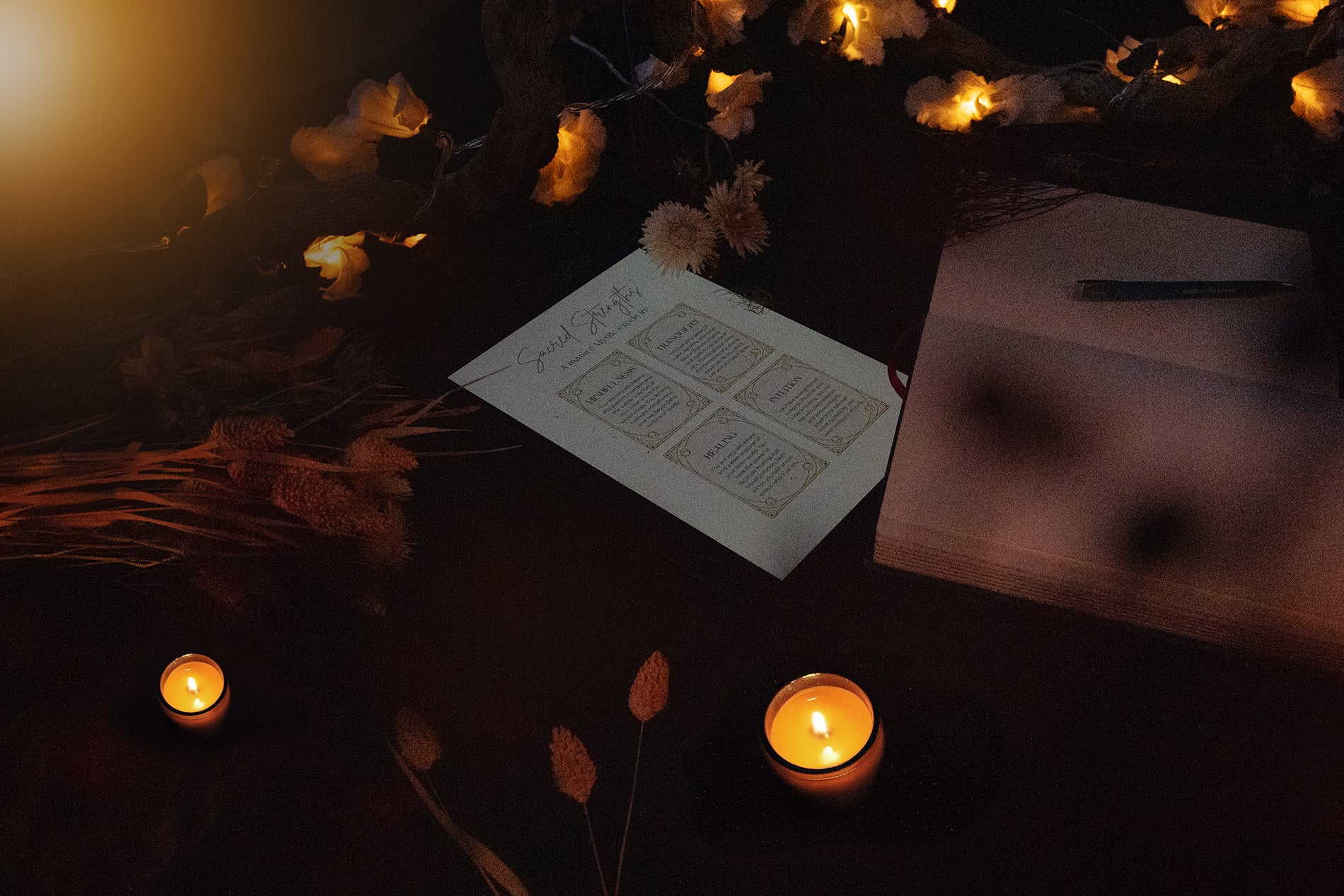
The Feminine Archetype Workbooks are gentle companions for self-reflection and personal growth. Each one offers prompts, insights, and exercises to help you become the woman you were always meant to be. If you’re curious to explore what these archetypes might awaken in you, let the workbooks guide you into deeper alignment with your most authentic self.

Quick navigation
5 comments
Your new quiz makes me very strongly the Mystic, with Sage as secondary. This is always the results in these quizzes, not just yours, but with less difference between the two. I see that when I was working I was overtly much more Sage than now that I am retired. But I think back then, I was unaware of the Mystic within me. I have just bought workbook and look forward to delving deeply into my true nature. Thank you.
I wasn’t surprised to find I was a Mystic, being tuned into my inner knowing and intuition for a long time. Thank you for the free blog post, it was interesting reading and has given me guidance in continuing my development. I look forward to receiving the workbook and The Mystic wall print. I forgive you regarding the postage!
I wasn’t surprised to find I am ‘the mystic’ archetype after so many years travelling this journey in this incarnation. The confirmation was a gift after years of struggle to ‘contain’ the mystic beneath a cloak of normality… it has been liberating. The years of marching to a drum others do not hear has been a challenge. But now, I embrace my destiny.
I was quite surprised to have the mystic as my dominant archetype. I did several tests and the result was constant. Then again it makes so much sense. I’ve changed in so many ways over the past years, with hardships, therapy and striving for inner peace. There is so much I want to learn about my soul and I am excited to learn to embrace this archetype ✨
Taking the quiz to determine my current feminine archetype was incredibly helpful. Finding out that the Mystic archetype was my current dominant archetype and reading about this type was resonant and profound. Thank y0u for providing a means to determine relevant archetypes and information about them.